

SABR Digital Library: The Negro Leagues Are Major Leagues
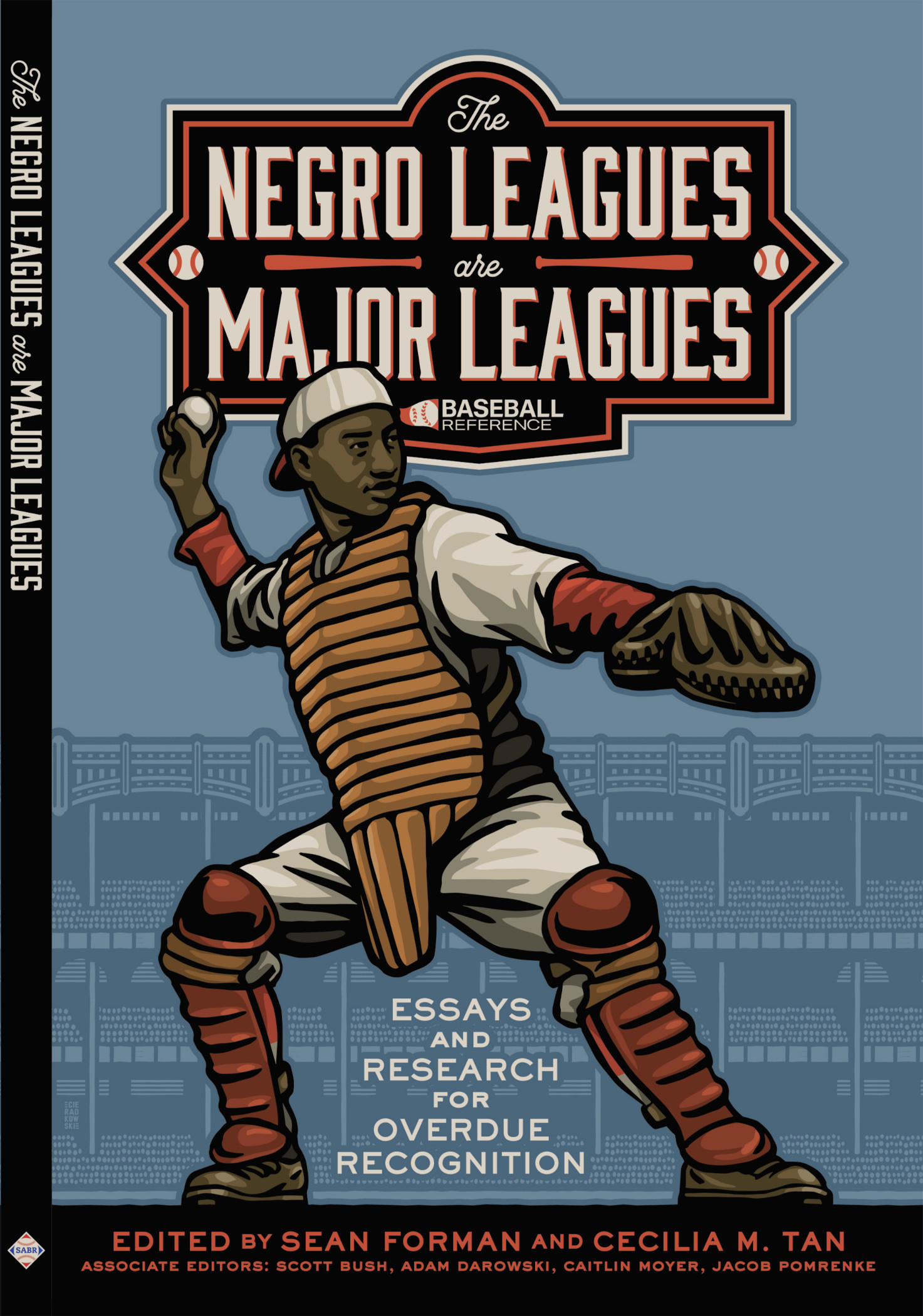
The Negro Leagues are Major Leagues: Essays and Research for Overdue Recognition
Edited by Sean Forman and Cecilia M. Tan
Associate Editors: Scott Bush, Adam Darowski, Caitlin Moyer, Jacob Pomrenke
Publication Date: January 14, 2022
ISBN (ebook): 978-1-970159-62-2, $9.99
ISBN (paperback): 978-1-970159-63-9, $19.99
8.5″ x 11″, 176 pages
“It’s so important to have all of [this] information accessible to everybody. The more information that can be made available and the more visible that we can make it the better. It’s the history of the whole game, not just part of it. People are finally going to get to see both sides of the story and get to understand that the Negro Leagues were very, very important, the players were very important and, most importantly, they brought the community together with a common love.” — Adam Jones, 14-year major-league veteran
“We are thrilled that MLB has finally acknowledged what we already knew to be true — that the Negro Leagues were indeed major league. We are particularly happy that the numbers of these legendary players will become a part of the official record and, undoubtedly, people will become more curious about these players’ stories.” — Bob Kendrick, president of the Negro Leagues Baseball Museum
The Negro Leagues are Major Leagues is a unique introduction to the history of the segregation of professional baseball, telling the story of the Negro Leagues while simultaneously recounting how researchers, statisticians, and historians rebuilt and rediscovered the history of Black baseball that was pushed into obscurity in the wake of Jackie Robinson and integration.
Recent examinations of the partially rebuilt statistical record led scholars, notably Todd Peterson, to call for the Negro Leagues to be recognized as major leagues, alongside other historical professional major leagues such as the Federal League and the Union Association. In December 2020, Major League Baseball itself declared its recognition of the Negro Leagues as major leagues, and the work to integrate the statistics compiled by Gary Ashwill and the Seamheads Negro Leagues Database into stats site Baseball-Reference.com began.
To accompany the launch of the newly revamped, integrated site, Baseball Reference commissioned a set of articles to introduce Negro League history and the effort to rebuild the fragmented record of that history to a new audience. Supplemented here with additional articles on Black baseball from the SABR archives, the articles in this book represent multiple groups of pioneers.
SABR members, get this e-book for FREE!
- E-book: Click here to download the e-book version of The Negro Leagues are Major Leagues for FREE from the SABR Store. Available in PDF, Kindle/MOBI and EPUB formats.
- Paperback: Get a 50% discount on The Negro Leagues are Major Leagues paperback edition from the SABR Store ($12.95 includes shipping/tax; delivery via Kindle Direct Publishing can take up to 4-6 weeks.)
Buy the book
- E-book: Click here to download the e-book version of The Negro Leagues are Major Leagues for $9.99 from the SABR Store. Available in PDF, Kindle/MOBI and EPUB formats.
- Paperback: Get the paperback edition of The Negro Leagues are Major Leagues from the SABR Store ($24.95 includes shipping/tax; delivery via Kindle Direct Publishing can take up to 4-6 weeks.)
Click here to read the introduction, by Sean Forman and Cecilia Tan.
The Baseball-Reference Essays
- Negro Leagues By The Numbers, by Bob Kendrick, President of the Negro Leagues Baseball Museum, with Joe Posnanski: A look at what the statistics of the Negro Leagues mean.
- Negro Leagues = Major Leagues, by Todd Peterson: An analysis of the quality of play of the Negro Leagues and the White major leagues.
- A Love Story, by Adam Jones, 14-year MLB veteran: What the Negro Leagues mean to a modern Black star.
- The Black Boys of Summer: A statistical observation, by Larry Lester: A look at how the Negro League stats were compiled and the effect on the record books.
- Gibson Family Reflections on the Publication of Baseball Reference’s Negro Leagues Statistics, by Sean Gibson, great-grandson of Josh Gibson: What it means to family members of Negro League stars to see this update.
- Women in the Negro Leagues, by Leslie Heaphy: A discussion of the women who were executives and players the Negro Leagues.
- A Black Baseball Legacy, by Michael E. Lomax: The evolution of Black Baseball from the 19th through the 20th century.
- Turkey Stearnes and the Inclusive Grand Slam, by Vanessa Ivy Rose, granddaughter of Turkey Stearnes: A reflection on the legacy of Hall of Famer Turkey Stearnes.
- Building the Seamheads Negro Leagues Database, by Gary Ashwill: A look at how the data that you see on the site today was collected.
- Historiography of Black Baseball & Negro Baseball Leagues, by Gary Gillette: A timeline of important Black Baseball and Negro League histories and reference works.
- Still Standing: Where to See Extant Negro League Ballparks, by Gary Gillette: A look at which Negro League ballparks are still standing.
- The Long Road to Jackie Robinson: Nineteenth Century Pioneers in Black Ball, by Ryan Swanson: From Charles Douglass (son of Frederick) to Octavius Catto, all the way to Jackie Robinson.
- Latinos in the Negro Leagues, by Adrian Burgos Jr.: The history of Latin stars in the Negro Leagues from Alex Pompez to Luis Tiant.
- The Major Negro Leagues, by Adam Darowski: A look at the seven major Negro Leagues.
The SABR Articles
- The Negro Leagues Revisited, by Jules Tygiel: This 1986 article traces the history of literature and published sources of information about the Negro Leagues, from Sol White’s seminal Official Baseball Guide to Robert Peterson’s Only the Ball was White to John Holway’s Voices from the Great Black Baseball Leagues, and a plethora of oral histories, interviews, and academic studies that followed in the 1970s and 1980s.
- Rube Foster and Black Baseball in Chicago, by Jerry Malloy: Scholar Malloy, the namesake of SABR’s annual Negro Leagues conference, here paints the picture of Chicago’s Rube Foster, the “founding father” of the Negro Leagues, and goes on to detail how after the collapse of the leagues during the Great Depression, the resurgent leagues showcased their talent annually at Comiskey Park in the lavish East-West All-Star Game.
- The Black Press and the Collapse of the Negro League in 1930, by David Hopkins: Tracing the effects of the Great Depression on the Negro National League through the spotty and sometimes contradictory coverage found in the Pittsburgh Courier, the Black weekly newspaper with the largest circulation.
- Black Bluejackets: Great Lakes Negro Varsity team in 1944, by Jerry Malloy: As the Navy began to admit Black sailors to their ranks, they likewise admitted them to sports programs and teams that were important public relations and morale-building tools. The Great Lakes “Negro Varsity” would field numerous Negro League stars and pave the way for the eventual integration of baseball.
- Pitching Behind the Color Line—Baseball, Advertising, and Race, by Roberta Newman: A look at representations of African Americans and baseball imagery in advertising in the 1930s and 1940s, in the Black weeklies, local newspapers, and, eventually, television.
- Umpires in the Negro Leagues, by Leslie Heaphy: The history of umpires in the Negro Leagues, from the practice of using White umpires to pioneering Black umpires like Bob Motley and Julian Osibee Jelks.
- Quebec Loop Broke Color Line in 1935, by Merritt Clifton: Eleven years before Jackie Robinson integrated the Montreal Royals en route to the Brooklyn Dodgers, a pitcher-outfielder named Alfred Wilson joined the Granby Red Sox of the Quebec Provincial League, an unaffiliated independent league.
- The Double Victory Campaign and the Campaign to Integrate Baseball, by Duke Goldman: The two victories sought by the Double V campaign were to defeat Nazism abroad and racism at home. Launched by The Courier, the largest of the Black newspapers in the US, the campaign would ultimately score two victories: the desegregation of baseball and the US military.
Contributors include descendants of Negro Leaguers, a major leaguer, and past and present giants in the field of Negro Leagues research. Larry Lester sits alongside 14-year major league veteran Adam Jones, Sean Gibson — the great-grandson of Josh Gibson and director of the Gibson Foundation — joins Vanessa Ivy Rose, the grandaughter of Turkey Stearnes, and Bob Kendrick, the president of the Negro Leagues Baseball Museum. Jules Tygiel and Jerry Malloy share pages with Todd Peterson, Gary Ashwill, Leslie Heaphy, Adrian Burgos Jr., and many more.