
SABR 54: Overlooked 19th Century Base Ball Legends project concludes with final selections
JULY 30, 2026 — Eight baseball greats were selected as SABR Overlooked 19th Century Base Ball Legends for 2026 on Thursday, July 30 at the Nineteenth Century Committee’s annual business meeting at SABR 54 in Cleveland, Ohio.
This year’s selections include Tommy Bond, George Stovey, Grant “Home Run” Johnson, Paul Hines, Joe Start, Cal McVey, Ben Shibe, and John T. Brush.
In June, 165 SABR members submitted their votes for the final eight Overlooked 19th Century Base Ball Legends — 19th-century players, managers, executives, or other baseball personalities not yet inducted into the National Baseball Hall of Fame in Cooperstown, New York. The ballot consisted of 36 candidates, nine from each of four tracks: Players from the Major Leagues (1876–1900), Pioneers/Contributors, Managers/Executives/Umpires, and Black Baseball.
These eight selections bring the total number of Overlooked Legends to 25, completing a project that began in 2008 with the goal of bringing attention to baseball greats who have been overlooked by the National Baseball Hall of Fame. Two Overlooked Legends were eventually inducted into the Hall of Fame: Deacon White in 2013 and Bud Fowler in 2022.
Previous Overlooked Legends were Pete Browning in 2009, Deacon White (2010), Harry Stovey (2011), Bill Dahlen (2012), Ross Barnes (2013), Doc Adams (2014), Tony Mullane (2015), Jack Glasscock (2016), Bob Caruthers (2017), William Hoy (2018), Jim Creighton (2019), Bud Fowler (2020), Charlie Bennett (2021), Moses Fleetwood Walker (2022), Bobby Mathews (2023), Chris Von der Ahe (2024), and Al Reach in 2025.
Below are the biographies of the 2026 Overlooked Legends, along with full voting results.
Tommy Bond
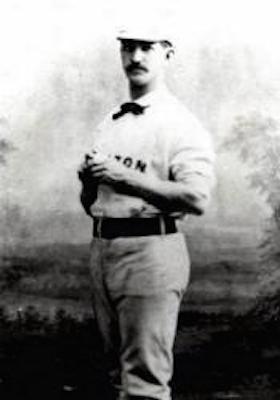 Thomas Henry Bond was the best pitcher of the second half of the 1870s and the last living veteran of the National League’s inaugural season. Bond is the only NL pitcher to win 40 games three times, winning 123 games from 1877 through 1879. He paced the league in wins, ERA, and strikeouts two times each and is third all-time in strikeouts per walk (5.04) after active players Jacob deGrom (5.36) and Chris Sale (5.27). He got his start with the NL’s Brooklyn club in 1874 before joining Hartford the following year. While with the Dark Blues, Hall of Famer Candy Cummings taught the right-hander the secrets of his famous curveball, which ultimately led to Bond becoming the team’s ace pitcher. He won 50 of 79 decisions before being released from the team after making unproven accusations of throwing games against the team’s manager, Bob Ferguson.
Bond signed with Boston for the 1877 season and won the first pitching Triple Crown, winning 40 games with a 2.11 ERA and 170 strikeouts. He led Boston to back-to-back pennants in 1877 and 1878. In 1879 he began to have arm soreness late in the year which led to a good but not great season in 1880. After throwing 3,359 innings in seven seasons, Bond’s effectiveness essentially disappeared when the mound was moved back to 50 feet in 1881, winning only 13 more games the rest of his major league career.
After an eight-game stint with Worcester in 1882, his NL playing days were over. He was appointed a NL umpire for the 1884 season before joining Boston of the Union Association. He was released from Boston during the season and joined Indianapolis of the American Association for seven games to end his major league career. He finished his career ranked third with 234 wins against 163 losses, a 2.14 ERA, and 972 strikeouts (compared to only 193 walks). He attempted comebacks with Memphis of the Southern League in 1885 and Brockton of the New England League in 1886. In between those minor league stints, he was an umpire for the NL in 1885. Bond was one of the first major league players born in Ireland and the first star pitcher from the Emerald Isle. Today, the top pitching honor in the Irish Baseball League is called the Tommy Bond Best Pitcher Award. Bond was an Overlooked Legend finalist from 2018–2025, finishing second last year.
John T. Brush
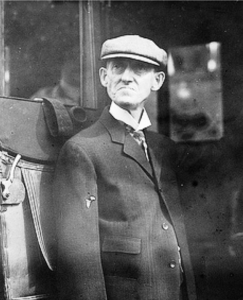 John Tomlinson Brush was the owner of three major league franchises, most notably the New York Giants. Born in 1845, Brush served in the Civil War before opening a department store in Indianapolis in 1875. His investments in baseball were originally intended to promote his store. In 1887, Brush bought the St. Louis Maroons and moved them to Indianapolis, where he already owned a stadium, and called them the Hoosiers. Brush created a plan that would split players into five groups based on their performance, each group having a salary cap. His fellow owners approved the “Brush Classification Plan” and the players revolted, leading to the formation of the Players’ League in 1890.
After the Hoosiers folded following the 1889 season, Brush purchased stock in the New York Giants. The next year he purchased the Cincinnati Reds and owned the club until 1902. That August, Giants owner Andrew Freedman turned over control of the team to Brush. The pair stocked the Giants with talent by trading Christy Mathewson from the Reds to the Giants and purchasing the American League’s Baltimore Orioles so they could release (and then sign for the Giants) John McGraw and Joe McGinnity. Brush purchased the Giants outright in 1903 and oversaw pennants in 1904, 1905, 1911, and 1912 (and a World Series win in 1905). He died after the 1912 season. In 1946, he was placed on the Honor Rolls of Baseball by the National Baseball Hall of Fame. Brush was an Overlooked Legend finalist in 2025.
Paul Hines
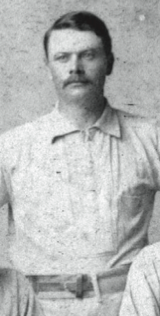 Paul Aloysius Hines, an outstanding defensive center fielder, was among the best all-around players in the game for 20 seasons despite battling significant hearing loss and was most likely baseball’s first deaf major league player. He started his career with Washington of the National Association before becoming a member of the Chicago White Stockings in 1874 and playing for the first National League champion in 1876. In 1878, he joined Providence and became baseball’s first Triple Crown winner when he led the league with four homers, 50 RBIs and a .358 batting average. He also led the league in total bases (125), slugging percentage (.486), and on-base plus slugging (.849). He followed his historic season with another batting title in 1879 (.357), while also leading the league in games (85), hits (146), and total bases (197) as the Grays won their first NL championship.
In 1884, along with Old Hoss Radbourn, Hines led the Grays to the NL pennant before defeating the American Association’s New York club to win the first “World Series.” Hines ended his career with 1,217 runs (sixth all-time), 2,133 hits (third), 549 extra-base hits (fifth), 855 RBIs (seventh), and a .302 batting average. Hines was an Overlooked Legend finalist in 2009 and 2011–2025, finishing sixth last year.
Grant “Home Run” Johnson
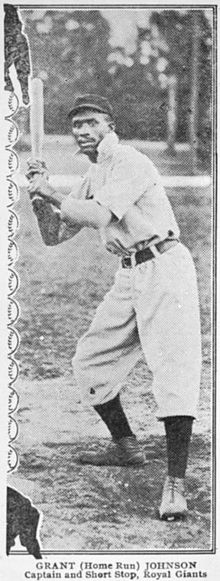 Grant U. Johnson was one of the finest shortstops in the history of baseball. In 1894, he played with Bud Fowler on the semi-professional Findlay club where he would become known as “Home Run” Johnson and “the greatest hitter in the west.” Baseball lore suggests he slugged 60 homers during the season while the team won 96 of 112 games. The following year he was playing in Adrian, Michigan as the captain and shortstop of the famed Page Fence Giants, a team he and Fowler founded with the financial backing from fence magnate J. Wallace Page. Fowler departed during the 1895 season, and Johnson guided the Giants to a 118-36-2 record.
Following the 1898 season (in which he reportedly hit 30 home runs as the Giants went 107-10), Johnson and several of his Page Fence teammates moved to Chicago’s Columbia Giants. In 1900, Johnson joined the Chicago Unions before rejoining the Columbia Giants for two more seasons. He played with the Cuban X-Giants in 1903 and 1904 before signing with the great 1905 Philadelphia Giants. From there, he joined the Brooklyn Royal Giants while spending his winters playing in Cuba.
In 1910, Johnson was signed by the Leland Giants before spending his last few seasons with the New York Lincoln Giants. Johnson also played several winters in Cuba, first traveling with Cuban X-Giants in 1903 and 1904 and then joining Cuban League teams Fé (in 1906-07) and Habana (for several seasons). According to the statistics available on Seamheads.com, Johnson, a disciplined hitter who rarely struck out, batted .310 with an OPS+ of 158 in 405 career games. Johnson was an Overlooked Legend finalist from 2021-2025, finishing fourth last year. He was also a finalist on the National Baseball Hall of Fame’s Early Baseball Era ballot in 2021.
Cal McVey
 Calvin Alexander McVey was a premier batsman and versatile ballplayer during his playing days. He gained prominence as a member of the legendary Cincinnati Red Stockings of 1869 and 1870. He joined Boston in the National Association for the next two seasons as catcher, helping the team win the NA championship in 1872. He played and managed Baltimore in 1873 but returned to Boston for two more seasons and two more NA championships while becoming a member of baseball’s original “Big Four” with teammates Ross Barnes, Al Spalding, and Deacon White. When the NA ceased operations, McVey was the league’s third leading career hitter with a .362 average while being third in hits (476), tied for fifth in homers (8), and first in RBIs (277).
In 1876, the “Big Four” joined the National League’s White Stockings with McVey as their first baseman and change pitcher. The team won the inaugural NL championship. After a two-year stint with Cincinnati, McVey gave up the majors and headed westward at the age of 29. He continued to play ball sporadically in California for almost another decade. When he left Cincinnati, he was the career leader in hits (869) and RBIs (449), third in runs (555), and fourth in games played (530) and batting average (.346). George Wright once offered his opinion and was quoted in 1909 as saying: “I should say that Cal McVey was the greatest player, being a good catcher, first baseman, right fielder, change pitcher and strong batter; a hard, earnest player, and strong in any of the above positions.” McVey was an Overlooked Legend finalist in 2020, 2021, 2023 and 2025, finishing eighth last year.
Ben Shibe
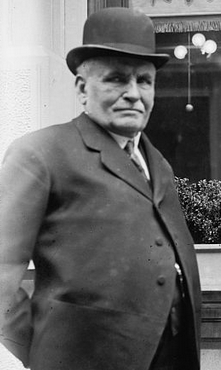 Benjamin Franklin Shibe was an innovator, baseball manufacturer, baseball stakeholder, executive and owner. Born in Philadelphia’s impoverished Kensington neighborhood, Shibe worked as a streetcar driver and his family’s leather working facility where he began making baseballs. By 1873, Shibe and his brother John founded J.D. Shibe & Company, which manufactured baseballs and sporting goods and sold them to retailers. In the mid-1870s, Shibe sponsored an amateur team in Philadelphia. In 1882, Shibe withdrew his interest from J.D. Shibe & Company, and joined former Athletic and then sporting goods dealer Al Reach in a new venture, the A.J. Reach Company. Shibe’s manufacturing knowledge combined with Reach’s sales experience resulted in the largest sporting goods manufacturing business in the nation. Part of this success was due to Shibe’s invention of a machine that cut pieces of horsehide and punched holes in the leather to be used as baseball covers. The innovation allowed the A.J. Reach Company to mass produce a better-quality baseball at a better price.
At some point in the 1880s, Shibe also became a stakeholder in the American Association’s Philadelphia Athletics. In 1901, Shibe purchased a half-interest in the American League’s Philadelphia Athletics and was elected the club’s president, a position he held until his death in 1922. The Sporting News called Shibe “the Edison of the sport.” Of his many patents, perhaps Shibe’s most important was for the cork-centered baseball in 1909; the first “live ball.” Shibe was the driving force behind the building of the first concrete-and-steel stadium that was appropriately named Shibe Park after the baseball pioneer. Shibe was an Overlooked Legend finalist in 2022 and 2024.
Joe Start
 Joseph Start was born in New York City in 1842. He had one of the longest playing careers in baseball history. His size and athletic ability made him one of the most powerful hitters of the 1860s and the game’s finest defensive first baseman throughout his playing days. His career began in Brooklyn, first with the Enterprise Club in 1859 and then with the Atlantics in 1862. In the 1860s, Start scored 824 runs in 194 National Association of Base Ball Players (NABBP) games, leading the NABBP in runs in 1865 with 82 and in hits with 233 in 1868. From 1868 to 1870, he had 824 hits and 893 total bases in 154 games. In a game against the Eckfords on September 6, 1869, Start demonstrated his power by hitting four home runs with 23 total bases. On June 14, 1870, Start hit a crucial triple in the 11th inning that set up an Atlantics victory over Cincinnati to end the Red Stockings’ famous 71-game winning streak.
As early as 1869, Start became known as “Old Reliable” for his “steady play, cool pluck, and, above all, his fidelity to the Atlantic Club” as well as his integrity of character that went along with his skill in the field. The lefty hitter and thrower has often been credited as being the first to play off the bag at first base and was known as being a sure-handed receiver of balls thrown to him despite not wearing a glove. Start played with the New York Mutuals from 1871 to 1876 before joining the Hartfords of Brooklyn for the 1877 season. In 1878, as a member of the Chicago White Stockings, Start hit .351 and led the National League in hits (100) and total bases (125). He joined the Providence Grays in 1879 and stayed until the team folded after the 1885 season.
Start played on several championship teams, including the 1864–1866 and 1869 Atlantics teams, the NL-pennant winning Grays in 1879, and in 1884, as the team’s captain, the Grays won the first “World Series.” Start played with Washington in 1886 until he was released on July 12, ending his career three months shy of his 44th birthday. He batted .300 in eleven NL seasons and led his league in fielding percentage at first base six times between 1872 and 1884. He retired ranked sixth in games (1,070), runs (852), hits (1,417) and total bases (1,744) while ranking seventh in RBIs (544). Start was an Overlooked Legend finalist in 2012, 2019, 2021, 2023 and 2025, finishing seventh last year.
George Stovey
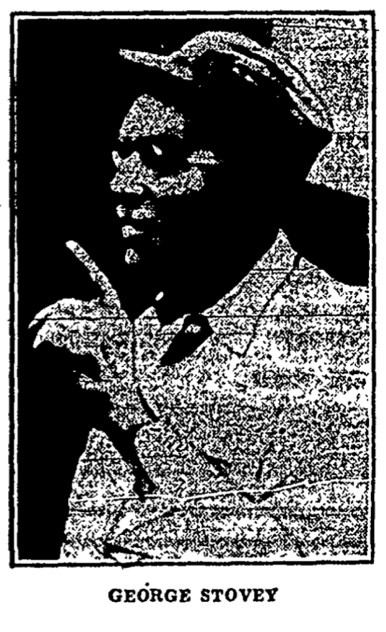 George Washington Stovey is considered by many to be the greatest African American pitcher of the 19th century. The left-hander was denied the opportunity to display his talent in the major leagues due to the color of his skin. He started out his career with a semi-pro team in the Williamsport, Pennsylvania area, his hometown, in 1884 and ended it there in 1897 with the city’s Central Pennsylvania League team. In between, he was a star in the top minor leagues and with Black Baseball’s greatest clubs of the time. The curveballer, who had a tremendous pick-off move to first base, emerged with the Jersey City club of the Eastern League in 1886. He started 31 games and completed them all, going 16–15 with a 1.13 ERA and 203 strikeouts in 270 1/3 innings while walking just 43 batters.
In 1887, he joined Newark of the International Association where he teamed up with catcher Fleet Walker to form the first black battery in integrated organized baseball. He led the league with 33 wins and had a 2.46 ERA in 424 innings. As baseball’s color line was being drawn, Stovey moved around between top black teams, including the Cuban Giants and New York Gorhams, and integrated-league teams. He went 60–40 with a 2.17 ERA in 102 games in the top minor leagues. He became an umpire in the minors and around Williamsport when his playing days were over. He has also been credited with coaching two Williamsport natives who made it to the majors, Johnny Lush and Weldon Wyckoff. Stovey was an Overlooked Legend finalist from 2018–2025, finishing third last year.
Voting Results
36 candidates were split into four tracks. There were eight total sections — the top two vote-getters from each track.
These are the voting results by track:
Players from the Major Leagues (1876-1900)
- Tommy Bond: 656 points
- Paul Hines: 546 points
- Jim McCormick: 433
- George Van Haltren: 424
- Lave Cross: 306
- Jimmy Ryan: 273
- George Gore: 240
- Mike Tiernan: 127
- Jack Stivetts: 114
Black Baseball
- George Stovey: 622 points
- Grant “Home Run” Johnson: 566 points
- Octavius Catto: 459
- Charlie Grant: 272
- Frank Leland: 158
- Harry Buckner: 99
- George Williams: 74
- Carlos Royer: 55
- S.K. “Cos” Govern: 49
Pioneers/Contributors
- Joe Start: 470 points
- Cal McVey: 451 points
- Lip Pike: 421
- Dickey Pearce: 378
- Dick McBride: 215
- Joe Leggett: 147
- Harry Stevens: 143
- William Wheaton: 128
- Francis Richter: 117
Managers/Executives/Umpires
- Ben Shibe: 214 points
- John T. Brush: 188 points
- Frank Bancroft: 171
- Jim Mutrie: 154
- Bob Emslie: 153
- Nick Young: 95
- John Gaffney: 76
- Arthur Soden: 59
- Jack Sheridan: 22
For more information on the Overlooked 19th Century Baseball Legends Project, visit SABR.org/overlooked-19th-century-baseball-legends or contact Project co-chairs Adam Darowski and Joe Williams.
Adam and Joe would like to thank all committee members (past and present) for participating in this worthwhile project: Matt Albertson, Tom Best, Charles Faber, Sam Gazdziak, Bob Gregory, Larry McGill, Justin Mckinney, Eric Miklich, Dan Neumann, Gary Passamonte, Ralph Peluso, Sam Reich and Tom Zocco, as well as all members of SABR’s Nineteenth Century Committee for assisting in selecting the previous final ballot nominees.
Originally published: July 30, 2026. Last Updated: July 17, 2026.